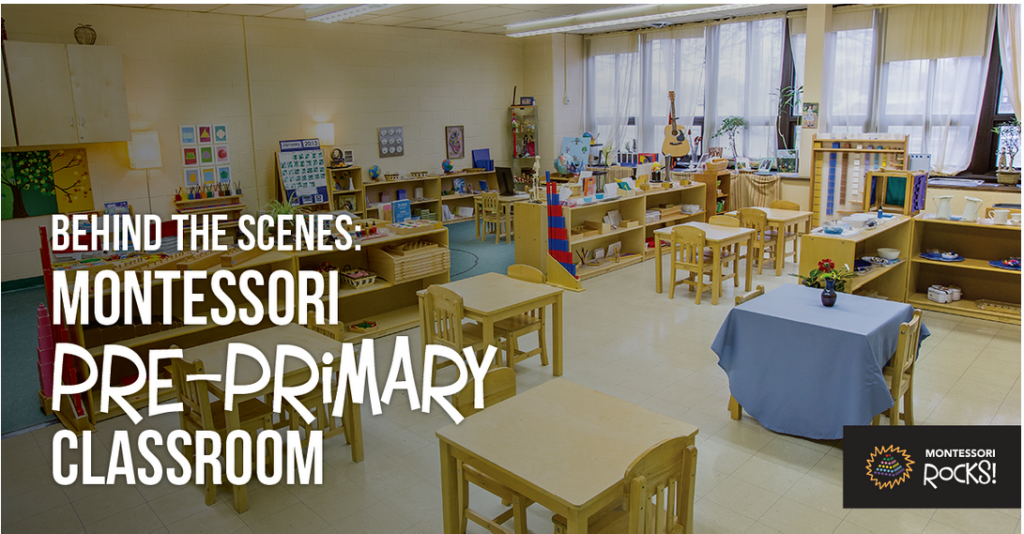
The Why &Inside your child’s Montessori classroom
As parents, one of the ultimate goals is to prepare your child to thrive, to be successful and happy, in a world that will sometimes be uncooperative in that process. Enter the Montessori school environment, we are perfectly placed, suited to work in tandem with you during your child’s vital developmental years.
From birth through age six signals the time of the Absorbent Mind stage of development. What this indicates is that for better or for worse, children are absorbing data around them at phenomenal rates, this is precisely how babies learn their mother tongue at such an early age. It bears reminding mommies and daddies to be cautious of the language used around the little ones as they will mimic. This is not only for the occasional naughty word, rather, but it is also to remind you to use proper words rather than baby talk. Love words absolutely have their place, what it is to say is that when naming and teaching the world around your child, use proper words and voice. It will give your little one a head-start in school. On to Montessori class, there you will find age-appropriate areas of study and exploration.
The Practical Life Area is where you will see works such a pouring, spooning, hand washing, table scrubbing, mirror polishing, silver polishing, shoe polishing, the Dressing Frames, etc….
The Dressing Frames teach your child how to zip, lace, button, tie their shoes, buckle, etc..
The reasoning for this area is to calm, focus, assist the child in choosing their dominant hand, working on pencil grip strength, coordination, order, finishing what they start, and the list of benefits goes on.
The Sensorial Area Works in tandem with the Practical Life area. This area is the child’s first introduction to base ten and higher math presented in a sensorial fashion. The child works with the Pink Tower (small/large), the Brown Stair(thick/thin), The Red Rods (long and short), Knobbed Cylinders (Height & Diameter), Knobless Cylinders (Height & Diameter), the Triangle Boxes (Introduce different types of triangles), Rectangle Boxes (Building different shapes), The Geometric Cabinet (flat plane shape), Geometric Solids (Three-dimensional shapes), Binomial & Trinomial Boxes ( learning the equation sensorially then mathematically).
The Math Area The math materials work in tandem with Sensorial and Language, everything is interconnected. Your child will begin with the number rods 1-5, then 1-9, after learning the quantity, your child is then taught to associate the numeral to the quantity. This is the process as your child proceeds through the teens, tens, Golden Beads, place value 1-9000, number composition, then ultimately leading to addition, subtraction, multiplication, and division. The goal is to prepare your child for elementary school.
The Language Arts Area begins with teaching your child the sounds that each letter makes, please do not teach the names, teach the sounds! The names come later we promise. Your child learns how to place the sounds in a word, word building, matching nomenclature. Handwriting is practiced simultaneously as the sounds are learned. We have early readers and practice sheets to coincide with the lessons. In addition to paper, your child can trace on chalkboards, whiteboards, or practice writing in sand trays.
Cultural Subjects is the area of study where all subjects quite literally converge. The name of this section is an umbrella term that covers, Social Studies, Earth Sciences, Geography, Cartography, Geology, Biology, and Anthropology. Your child will begin the nomenclatures of Botany and Zoology, learning to study the maps of the world, however, the children study the cultures of the place prior to labeling any map; the cuisine, the dress, the art, dance, a day in the life of a child, so they learn to understand the world around them. They will study minerals & semi-precious gemstones, the development of early man in history, dinosaurs, and so much fun is included in this area.
ART Throughout each area art is woven into the study and exploration. That can be painting, drawing, colored pencils, clay, weaving, hooking rugs, the opportunities are endless. The point is the creation not the replication of the teacher’s work. BGM
From birth through age six signals the time of the Absorbent Mind stage of development. What this indicates is that for better or for worse, children are absorbing data around them at phenomenal rates, this is precisely how babies learn their mother tongue at such an early age. It bears reminding mommies and daddies to be cautious of the language used around the little ones as they will mimic. This is not only for the occasional naughty word, rather, but it is also to remind you to use proper words rather than baby talk. Love words absolutely have their place, what it is to say is that when naming and teaching the world around your child, use proper words and voice. It will give your little one a head-start in school. On to Montessori class, there you will find age-appropriate areas of study and exploration.
The Practical Life Area is where you will see works such a pouring, spooning, hand washing, table scrubbing, mirror polishing, silver polishing, shoe polishing, the Dressing Frames, etc….
The Dressing Frames teach your child how to zip, lace, button, tie their shoes, buckle, etc..
The reasoning for this area is to calm, focus, assist the child in choosing their dominant hand, working on pencil grip strength, coordination, order, finishing what they start, and the list of benefits goes on.
The Sensorial Area Works in tandem with the Practical Life area. This area is the child’s first introduction to base ten and higher math presented in a sensorial fashion. The child works with the Pink Tower (small/large), the Brown Stair(thick/thin), The Red Rods (long and short), Knobbed Cylinders (Height & Diameter), Knobless Cylinders (Height & Diameter), the Triangle Boxes (Introduce different types of triangles), Rectangle Boxes (Building different shapes), The Geometric Cabinet (flat plane shape), Geometric Solids (Three-dimensional shapes), Binomial & Trinomial Boxes ( learning the equation sensorially then mathematically).
The Math Area The math materials work in tandem with Sensorial and Language, everything is interconnected. Your child will begin with the number rods 1-5, then 1-9, after learning the quantity, your child is then taught to associate the numeral to the quantity. This is the process as your child proceeds through the teens, tens, Golden Beads, place value 1-9000, number composition, then ultimately leading to addition, subtraction, multiplication, and division. The goal is to prepare your child for elementary school.
The Language Arts Area begins with teaching your child the sounds that each letter makes, please do not teach the names, teach the sounds! The names come later we promise. Your child learns how to place the sounds in a word, word building, matching nomenclature. Handwriting is practiced simultaneously as the sounds are learned. We have early readers and practice sheets to coincide with the lessons. In addition to paper, your child can trace on chalkboards, whiteboards, or practice writing in sand trays.
Cultural Subjects is the area of study where all subjects quite literally converge. The name of this section is an umbrella term that covers, Social Studies, Earth Sciences, Geography, Cartography, Geology, Biology, and Anthropology. Your child will begin the nomenclatures of Botany and Zoology, learning to study the maps of the world, however, the children study the cultures of the place prior to labeling any map; the cuisine, the dress, the art, dance, a day in the life of a child, so they learn to understand the world around them. They will study minerals & semi-precious gemstones, the development of early man in history, dinosaurs, and so much fun is included in this area.
ART Throughout each area art is woven into the study and exploration. That can be painting, drawing, colored pencils, clay, weaving, hooking rugs, the opportunities are endless. The point is the creation not the replication of the teacher’s work. BGM