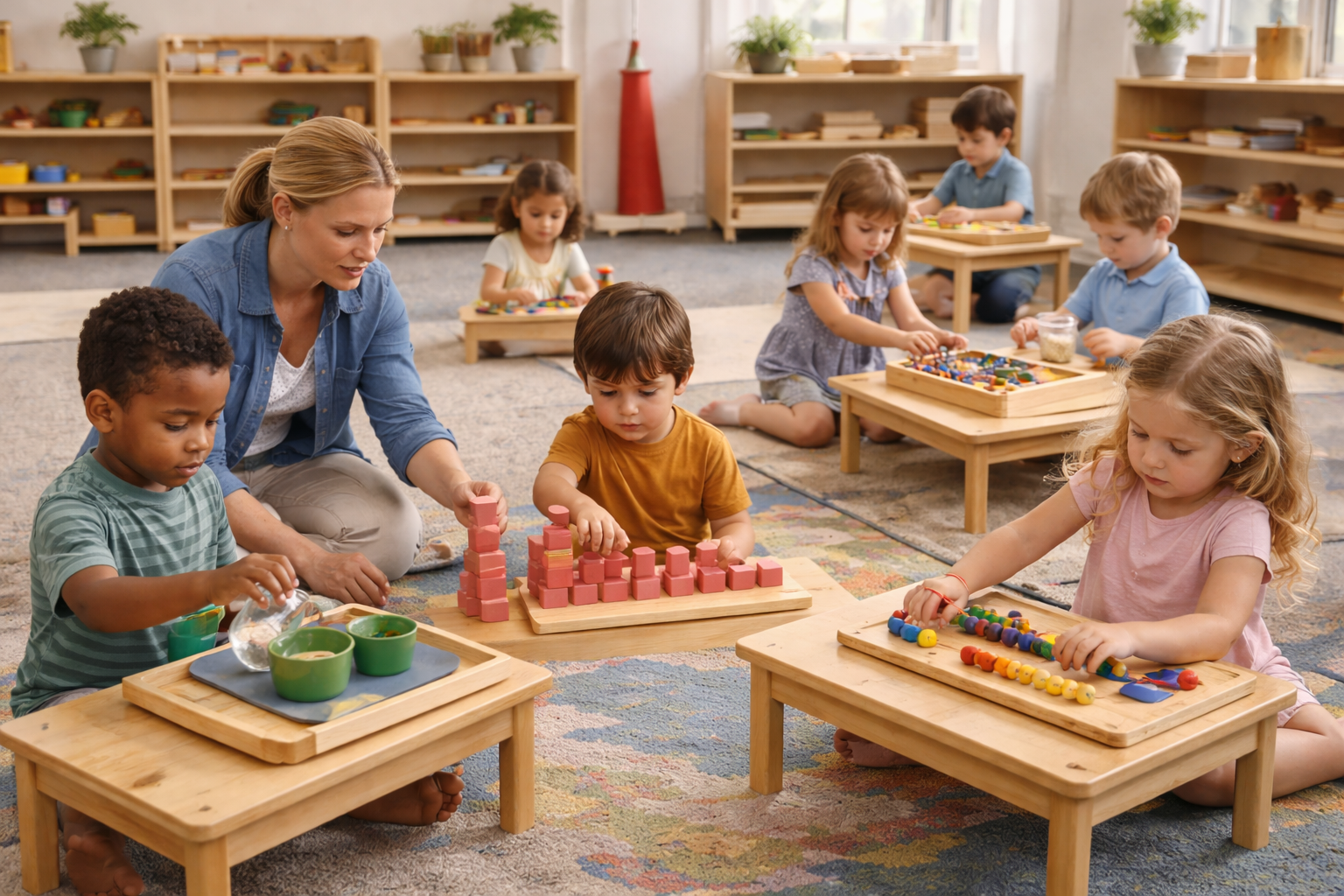
Montessori childcare has gained popularity in recent years, with many parents opting for this alternative education model for their children. But what exactly sets Montessori childcare apart from traditional daycare centers or preschools? Here are some reasons why Montessori childcare is considered superior by many parents and educators:
1. Child-Centered Education: In a Montessori childcare environment, children are encouraged to follow their own interests and develop at their own pace. Teachers act as guides, observing and supporting each child’s individual learning journey. This child-centered approach fosters independence, self-confidence, and a love for learning.
2. Hands-On Learning: Montessori classrooms are filled with hands-on, interactive materials that children can manipulate and explore. This hands-on approach to learning helps children understand abstract concepts through concrete experiences, making learning more engaging and meaningful.
3. Mixed-Age Classrooms: Montessori childcare typically groups children together in mixed-age classrooms, allowing younger children to learn from older peers and older children to develop leadership skills by helping younger ones. This multi-age environment promotes social skills, empathy, and a sense of community.
4. Emphasis on Self-Discipline: Montessori childcare teaches children self-discipline and self-regulation by giving them freedom within boundaries. Children are expected to follow classroom rules and respect their peers and materials. This focus on self-discipline helps children develop internal motivation and a sense of responsibility.
5. Respect for Individual Differences: Montessori childcare recognizes and celebrates each child’s unique strengths, interests, and learning styles. Teachers adapt their teaching methods to meet the needs of each child, fostering a sense of belonging and acceptance in the classroom.
6. Focus on Practical Life Skills: Montessori childcare places a strong emphasis on teaching practical life skills, such as pouring, buttoning, and washing dishes. These activities help children develop fine motor skills, concentration, and independence, preparing them for success in school and beyond.