What is the Difference Between Montessori and Daycare?
Navigating the world of early childhood education can be a maze of choices. Among the plethora of options available, two stand out prominently: Montessori and daycare. While both offer safe environments for children, their underlying philosophies, methods, and objectives differ. Let’s demystify these differences to empower you to make the best choice for your child.
Montessori Education: A Philosophical Approach
Originating from the work of Dr. Maria Montessori, this method is rooted in a deep understanding of child development.
Key Aspects of Montessori:
Child-Led Learning: In Montessori classrooms, children choose their activities based on their interests, guided by specially trained teachers.
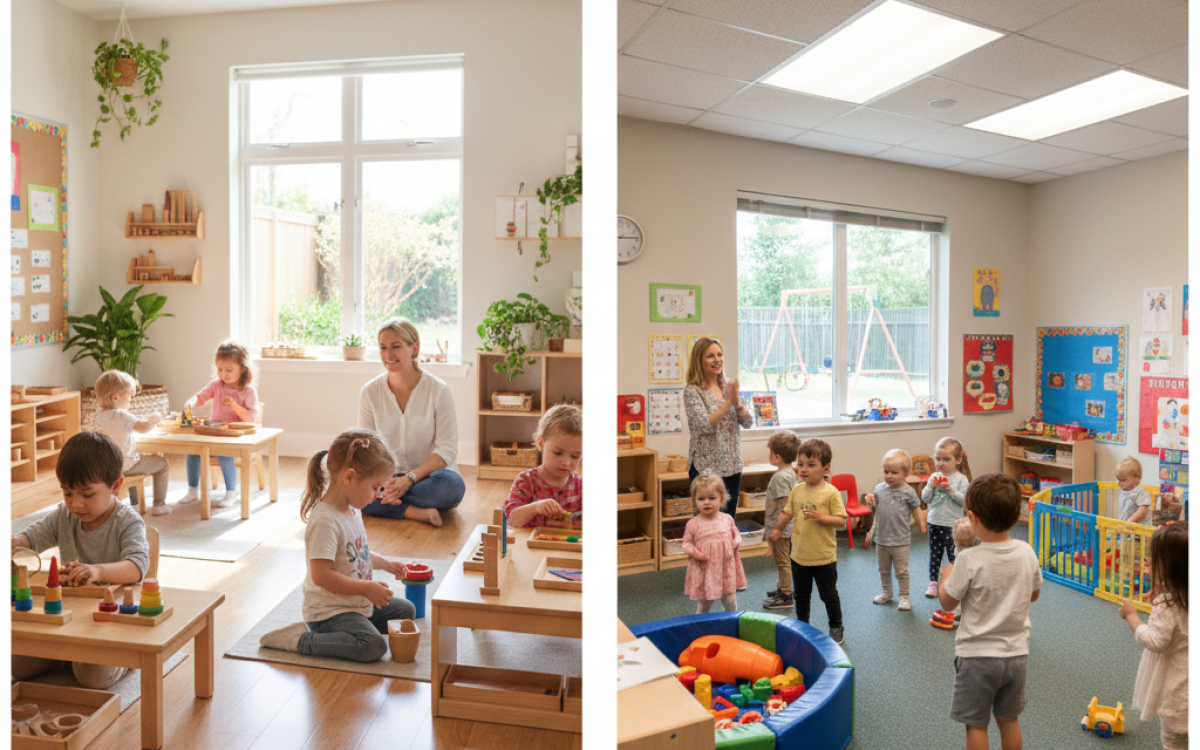
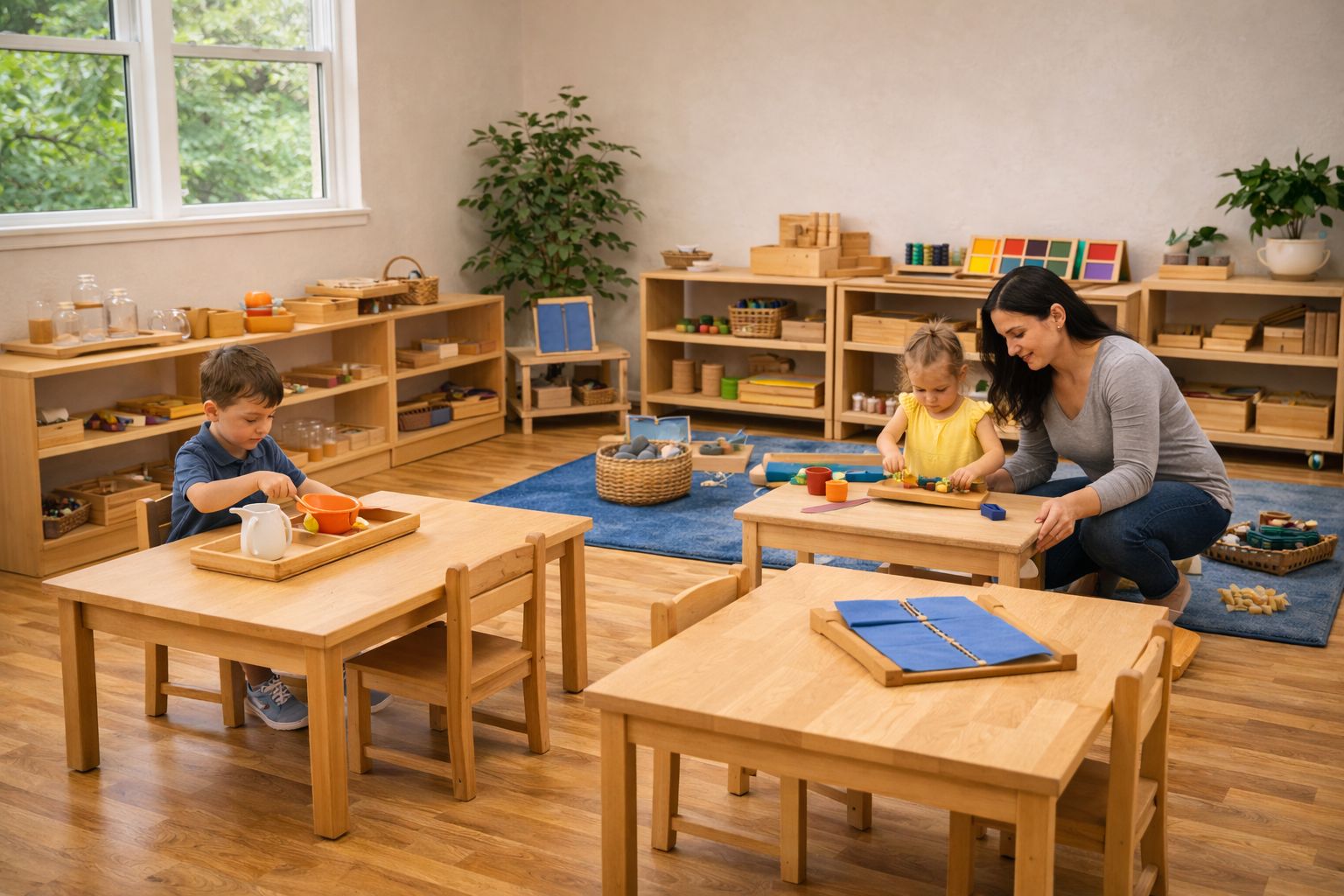
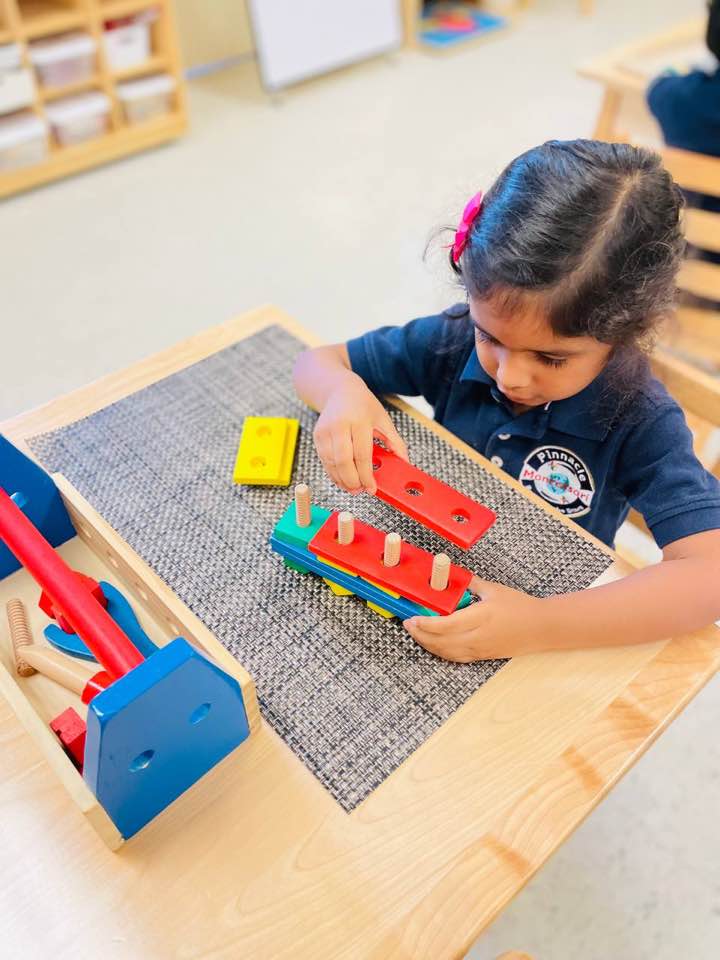
Prepared Environment: Every item, from furniture to learning materials, is meticulously chosen to aid a child’s development and encourage independence.
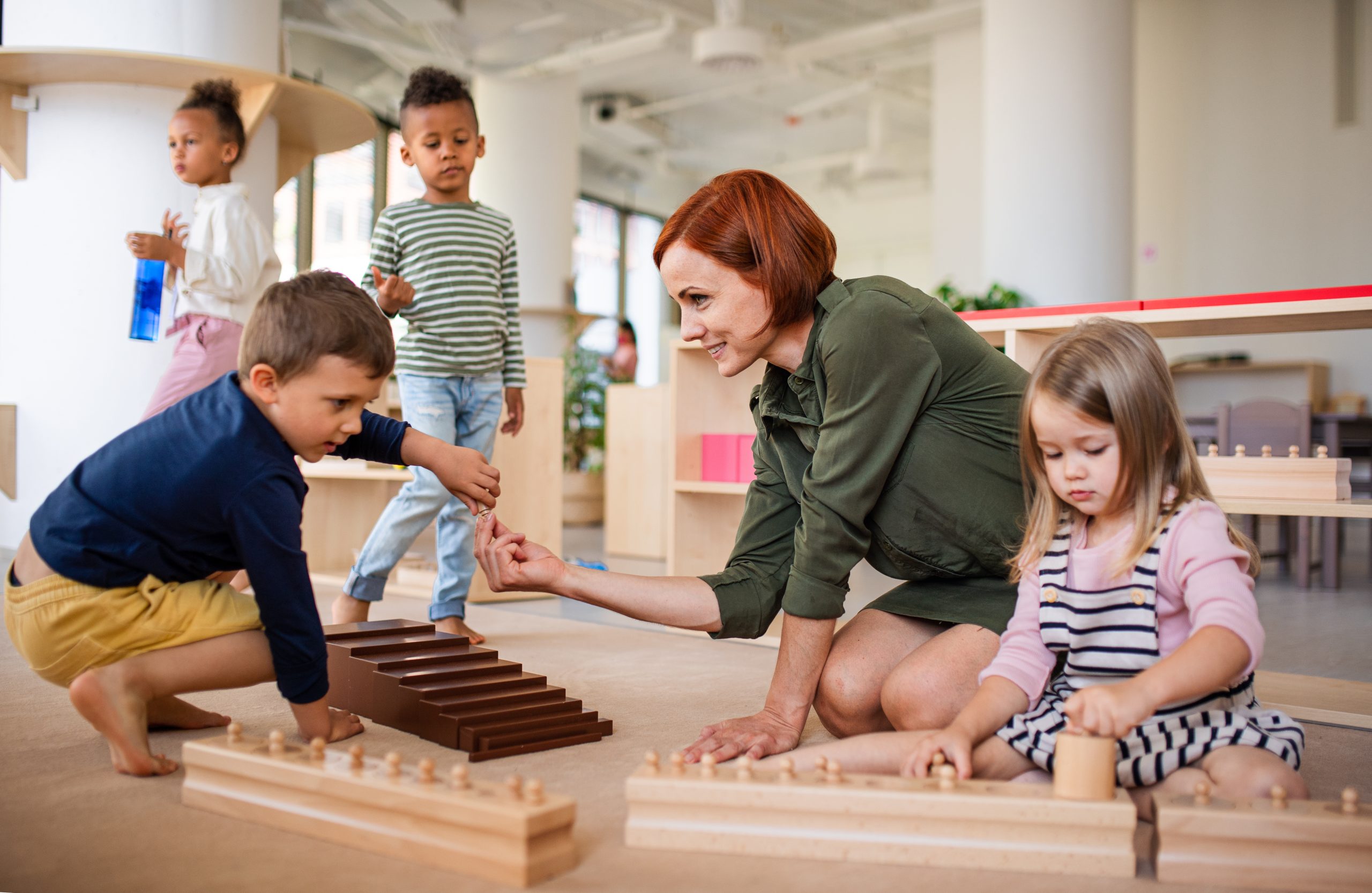
Multi-age Classrooms: Typically spanning three years, this approach facilitates peer learning, allowing younger children to learn from older ones and vice versa.
Specialized Materials: Montessori materials are tactile and self-correcting, promoting hands-on learning and self-discovery.
Holistic Development: Beyond academic achievement, Montessori places equal emphasis on the development of social, emotional, and physical skills.
Daycare: A Care-Centered Approach
Daycares provide care for children, often when parents are working. They may have a structured curriculum, but the primary focus is on providing a safe, nurturing environment.
Key Aspects of Daycare:
Flexible Scheduling: Daycares cater to working parents and often have extended hours compared to traditional schools.
Age-Segregated Groups: Children are usually grouped by age and progress to the next group on a set schedule.
Activity-Based Day: Most daycares have a daily schedule filled with a mix of playtime, naptime, and structured activities.
Varied Curricula: While some daycares may employ specific educational philosophies, many adopt a more general curriculum.
Montessori vs. Daycare: At a Glance
Primary Focus: Montessori emphasizes child-led, self-paced education in a meticulously designed environment, while daycare centers primarily provide care and safety for children.
Educator Role: In Montessori, educators are guides who facilitate independent learning. In daycare, caregivers may don multiple hats—from teacher to nurturer, depending on the time of day and activity.
Structure: Montessori schools often have more rigid structures when it comes to curriculum and daily routines, stemming from their educational philosophy. Daycares, on the other hand, may have a more flexible routine.
Both Montessori schools and daycares offer unique advantages. Your choice largely depends on your child’s needs, your educational objectives for them, and logistical considerations such as work hours and proximity.
Experience the Montessori Difference at Pinnacle Montessori of Sachse, TX
As you ponder the best environment for your child’s growth and development, consider giving them the Montessori advantage. At Pinnacle Montessori of Sachse, our dedicated team merges the rich Montessori methodology with a nurturing ambiance. We invite you to experience our carefully curated environment, which fosters not just academic, but holistic growth.
Take the first step in your child’s transformative journey. Schedule a tour with us and see firsthand why so many parents are choosing the Montessori way.