At the heart of early childhood education lies a simple but profound question: How do we best nurture young minds? Pinnacle Montessori of Sachse, TX, like many Montessori institutions across the globe, advocates for a child-centric model of education, which is often in contrast to the traditional kindergarten settings. But what truly differentiates Montessori kindergarten from its regular counterpart? Let’s dive in.
1. Philosophy and Foundations
Montessori Approach:
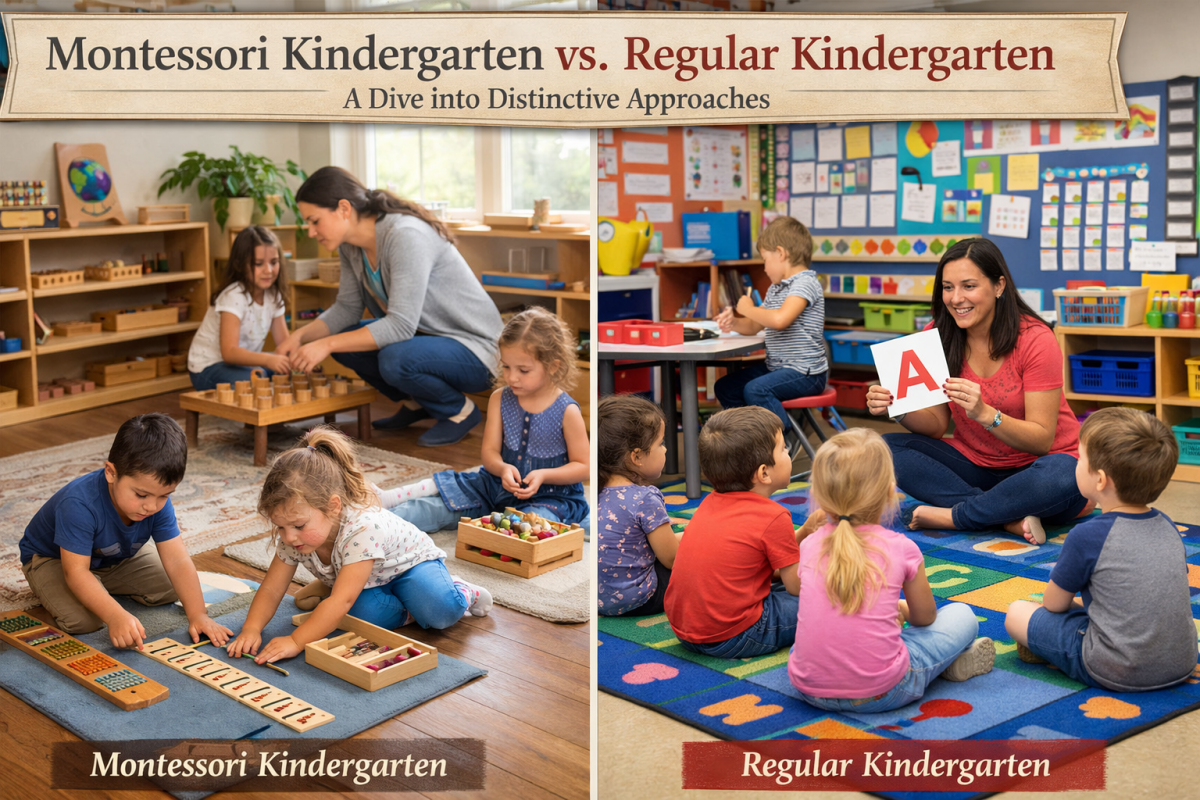
The Montessori method, developed by Dr. Maria Montessori in the early 20th century, emphasizes self-directed learning. Children choose activities based on their interests and move at their own pace. This method believes that children learn best when they are engaged in activities they love.
Learn More About Maria Montessori
Regular Kindergarten:
Traditional kindergarten often follows a more structured curriculum with set schedules. The teacher-directed approach emphasizes group activities, where children often learn as a class rather than individually.
2. Classroom Environment
Montessori Setting:
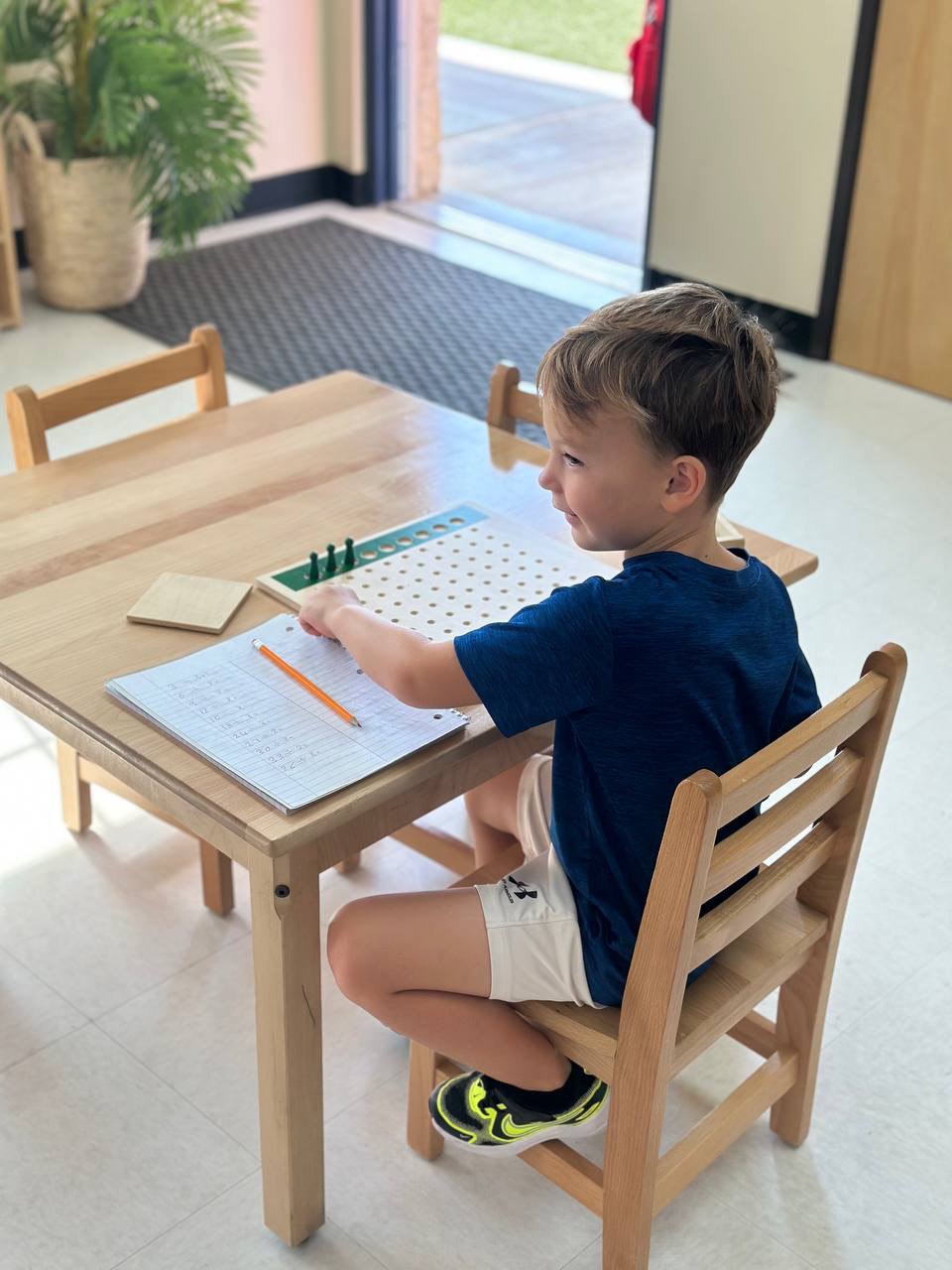
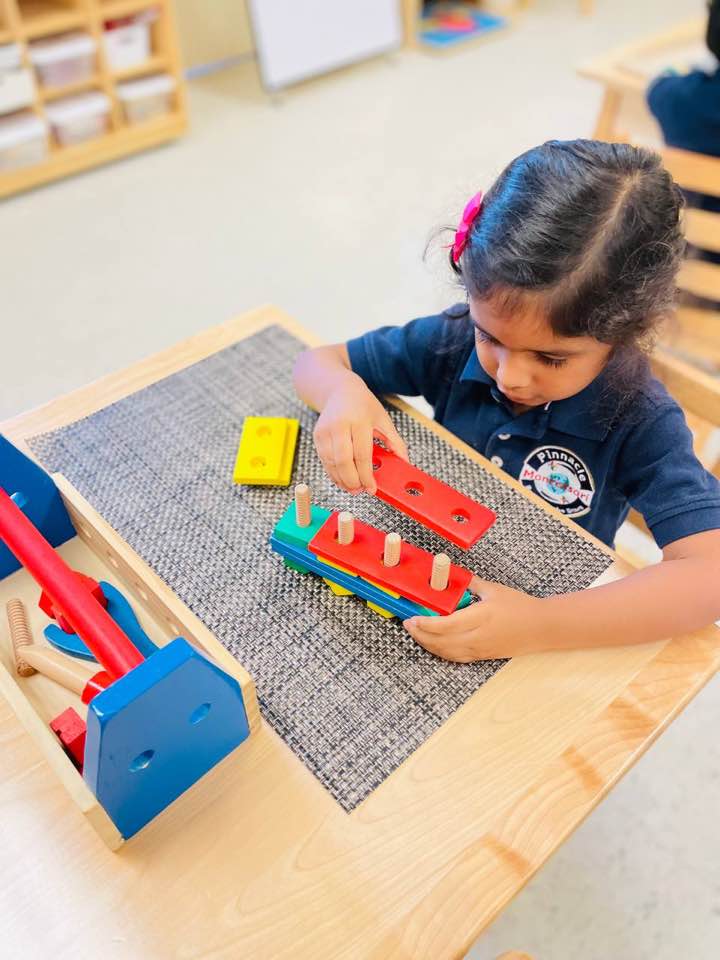
Montessori classrooms are known for their serene, orderly, and aesthetically pleasing environments. The furniture is child-sized, and materials are easily accessible, encouraging autonomy. The multi-age grouping fosters a sense of community, where older children often help and mentor the younger ones.
A Peek Inside a Montessori Classroom
Regular Kindergarten:
Traditional classrooms typically have a central teaching area with desks or tables. While there are interactive and play areas, activities are often scheduled, and transitions between them can be more structured.
3. Role of the Teacher
Montessori Educator:
Often referred to as a “guide”, the Montessori teacher observes each child and introduces new activities based on individual readiness. Their role is to facilitate and support rather than lead.
Regular Kindergarten Teacher:
The teacher in a regular kindergarten usually takes a central role, directing lessons and leading class activities. They provide instructions, correct mistakes, and often evaluate students through formal assessments.
4. Assessment & Progress
Montessori Evaluation:
Instead of traditional report cards, Montessori educators might provide detailed portfolios of a child’s work, observational notes, and progress reports that highlight a child’s journey.
Regular Kindergarten:
Children in traditional settings often undergo formal testing and receive standard report cards, which measure how they are doing in comparison to a set standard or their peers.
Both Montessori and regular kindergarten have their unique strengths. While Montessori emphasizes individual exploration and self-paced learning, traditional kindergarten offers a structured environment that can also benefit many learners.
For parents deciding between the two, please visit Pinnacle Montessori of Sachse, TX, and other traditional kindergarten settings can provide a firsthand experience of what each environment offers.
Remember, the best choice always depends on the unique needs, personality, and learning style of your child. Education is not one-size-fits-all, and thankfully, there are diverse approaches to nurture every young mind.